
320.253.2581 Loading...
Call Us
Service
Get Directions
A Toyota Buying Resource for Minnesota Drivers

The Complete Guide to Buying a Toyota in Minnesota

Choosing your next vehicle involves more than finding a model you like. This guide from St. Cloud Toyota walks through the decisions Minnesota Toyota shoppers should consider, including new versus used, vehicle type, hybrid options, financing, trade-in value, leasing, and long-term ownership.

Choose the right Toyota
Understand financing and trade-ins
Plan for Minnesota driving
Start With the Big Picture

A Smarter Way to Shop for Your Next Toyota

Vehicle shopping becomes easier when you separate the process into a few manageable decisions. Before comparing individual listings, think about how you drive, how much space you need, what you want to spend, and how long you expect to keep your next vehicle.

Minnesota drivers can ask a lot of one vehicle. A weekday commute may be followed by winter travel, family trips, towing, outdoor recreation, or long highway drives. The best Toyota for you is the one that fits those real-world needs without forcing you to pay for capability or features you are unlikely to use.

This guide is designed to help you build that decision logically. You can read it from beginning to end or jump directly to the part of the buying process that matters most right now.

Minnesota Driving

What Should You Consider Before Choosing a Toyota?

Start with the way the vehicle will actually be used. Climate, commute, passengers, cargo, recreation, and budget can all influence which Toyota makes the most sense.

Winter Driving

Think about the roads you use during winter, how often you encounter snow or unplowed surfaces, and whether ground clearance or available all-wheel drive belongs on your must-have list.

Daily Mileage

A long commute may make efficiency, seating comfort, driver-assistance features, and fuel costs especially important. Shorter local driving may lead to a different set of priorities.

Passenger Needs

Consider your typical passenger count rather than only the maximum number of seats. Child seats, frequent adult passengers, pets, and third-row access can all affect which cabin layout works best.

Cargo Space

Groceries, sports gear, work equipment, luggage, outdoor equipment, and home-improvement supplies can quickly change how much usable cargo room you need.

Towing and Recreation

If your plans include towing, hauling, cabin trips, boats, trailers, or regular outdoor recreation, compare vehicle capabilities carefully instead of assuming every SUV or truck serves the same purpose.

Fuel Efficiency

Consider annual mileage along with the type of driving you do. A shopper covering many miles each week may place a much higher value on fuel efficiency than someone with a short commute.

Total Budget

Look beyond the advertised vehicle price. Your down payment, trade-in, financing terms, insurance, fuel, maintenance, and expected ownership period all contribute to the bigger financial picture.

How Long You Will Keep It

Someone planning to keep a Toyota for many years may evaluate new versus used, mileage, technology, and initial purchase price differently from a driver who prefers changing vehicles more frequently.

Build a Must-Have List Before Browsing Inventory

Separate true requirements from preferences. For example, all-wheel drive may be essential while a panoramic roof may simply be desirable. This makes it easier to compare vehicles without letting one attractive feature distract from the needs that matter every day.

New vs. Used

Should You Buy a New Toyota or a Used Vehicle?

Neither option is automatically better. The right choice depends on how you balance price, features, mileage, warranty coverage, selection, and your expected ownership period.

Buying New

Why Consider a New Toyota?

Buying new provides access to Toyota's current lineup, current technology, available trims, and factory-backed coverage. It may also appeal to shoppers who plan to keep their next vehicle for a long time and want to begin ownership without previous mileage or ownership history.

  • Current model-year features and technology
  • Greater ability to compare current trims and equipment
  • Factory-backed warranty coverage
  • Potential access to current incentives
  • No prior owner or previous-use history
Buying Used

Why Consider a Used Vehicle?

Used inventory provides more variety in model year, mileage, brand, equipment, and price. It can be especially helpful for shoppers trying to maximize a specific budget or compare vehicles that may no longer be available as new models.

  • Broader range of purchase prices
  • More model years and mileage levels to compare
  • Potential to obtain additional features within a set budget
  • Inventory from Toyota and other manufacturers
  • Useful option for first-time or value-focused buyers
Helpful Strategy

Compare Both Before You Decide

A shopper who begins with used inventory may find that a new Toyota fits the budget once financing, incentives, or trade-in value are considered. Someone initially focused on new vehicles may discover that a recent used model delivers the equipment they want at a different price point.

Comparing both categories gives you a better understanding of the market and helps keep the decision focused on overall value rather than assumptions.

Compare total purchase cost
Compare mileage and condition
Compare features and equipment
Consider expected ownership length
Find Your Fit

Which Type of Toyota Fits Your Lifestyle?

Instead of starting with a model name, begin with the job you need the vehicle to perform. That usually narrows the Toyota lineup much faster.

Toyota Camry
Commuting and Everyday Driving

Toyota Cars

A Toyota car may be a strong fit when maneuverability, efficiency, passenger comfort, and everyday usability matter more than maximum cargo capacity or towing capability.

Consider a sedan or hatchback if your typical driving involves commuting, errands, city travel, highway trips, or smaller households that do not require SUV-size cargo space.

Toyota RAV4
Versatility and Family Use

Toyota SUVs and Crossovers

SUVs and crossovers can work well for drivers who want more cargo flexibility, an elevated seating position, available all-wheel drive on applicable models, or additional passenger space.

The most useful question is not simply how large the SUV is. Consider how often you use the second and third rows, how much cargo you carry with passengers aboard, and whether you need additional capability for recreation or travel.

Toyota Tacoma
Work, Hauling and Recreation

Toyota Trucks

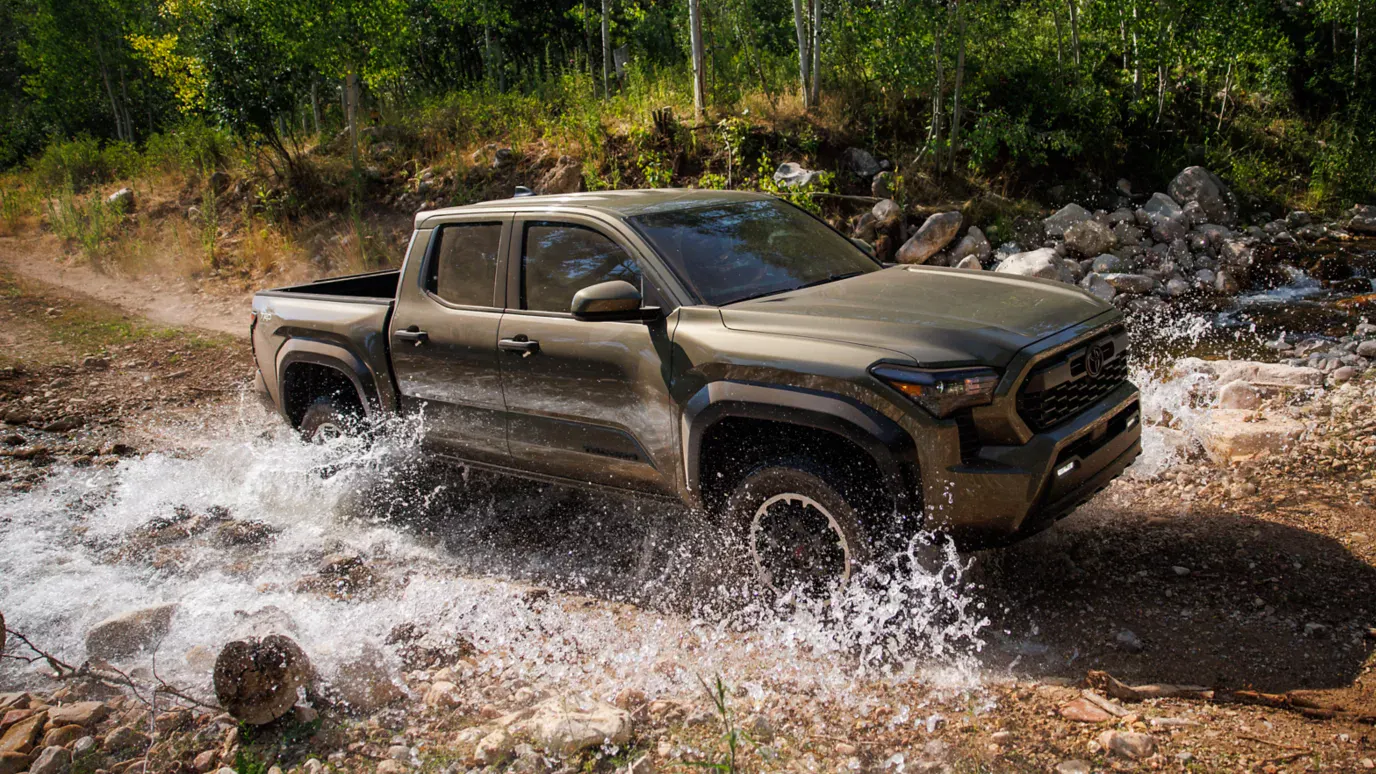
A pickup can make sense when the bed, towing capability, hauling needs, work use, or off-pavement travel are central to how you use your vehicle.

Compare trucks based on your actual needs rather than maximum capability alone. Bed utility, passenger space, maneuverability, towing requirements, and everyday driving comfort should all be part of the decision.

Toyota Sienna
Passenger Space and Practicality

Toyota Vans and Family Vehicles

Families carrying several passengers may benefit from prioritizing door access, seating flexibility, cargo space behind occupied rows, and ease of loading before choosing strictly by styling or exterior size.

Think about everyday tasks such as loading children, groceries, luggage, sports equipment, and other cargo. A practical cabin can matter more over years of ownership than a feature that seemed exciting during a short test drive.

Questions to Ask During a Test Drive

Can every regular passenger sit comfortably?
Is outward visibility comfortable for you?
Will your normal cargo actually fit?
Are the controls and technology intuitive?
Does it feel comfortable at your usual speeds?
Can you comfortably park and maneuver it?
Toyota Prius
Hybrid and Electrified Shopping

Should You Consider a Toyota Hybrid or Electrified Vehicle?

Electrified vehicles should be evaluated according to the way you drive, not simply because the technology is newer. Start by looking at your annual mileage, typical trip length, fuel spending, parking situation, access to charging when applicable, and how long you expect to keep the vehicle.

A hybrid can appeal to drivers who want to reduce fuel use without making charging part of their routine. Plug-in and battery-electric options introduce different considerations, including where and how the vehicle will be charged and how its driving range fits your regular travel.

Minnesota shoppers should also think about seasonal driving patterns. If winter trips, long-distance travel, or time spent away from home are common, consider how those use cases fit into your preferred powertrain before making a decision.

Estimate your typical weekly mileage.
Consider where the vehicle will normally be parked.
For plug-in options, think about realistic charging access.
Account for your normal winter travel and longer trips.
Understanding the Numbers

How Toyota Financing Fits Into Your Buying Decision

A comfortable vehicle purchase starts with understanding more than the sticker price. Financing determines how the purchase fits into your monthly budget and your overall cost of ownership.

What Determines Your Estimated Monthly Payment?

Monthly payments can vary significantly even when two shoppers choose similarly priced vehicles. The amount financed, loan term, interest rate, down payment, trade-in value, taxes, applicable fees, and incentives can all affect the result.

01

Vehicle Price

Begin with the selling price of the vehicle you are considering.

02

Down Payment

Money paid upfront generally reduces the amount that needs to be financed.

03

Trade-In Value

Your current vehicle may become an important part of your overall purchase structure.

04

Loan Term

The length of the loan affects how the financed amount is distributed across payments.

05

Interest Rate

Your rate affects borrowing cost and can change the payment even when the vehicle price stays the same.

06

Incentives

Available offers may change the financial comparison between vehicles or purchase options.

Your Current Vehicle

How Does a Trade-In Affect Your Toyota Purchase?

If you already own a vehicle, its value may play an important role in the amount you ultimately need to finance.

What Can Influence Trade-In Value?

Trade values are influenced by the vehicle itself and by the current market. An online estimate is a useful place to start, while an in-person appraisal can account for the specific condition and equipment of your vehicle.

  • Age and Model Year

    Model year helps establish where the vehicle sits within the used market.

  • Mileage

    Mileage provides context for how much the vehicle has been driven.

  • Condition

    Exterior, interior, tire, and mechanical condition may all influence appraisal value.

  • Equipment

    Trim level, drivetrain, options, and other equipment can affect market appeal.

  • Current Market Demand

    Used-vehicle supply and shopper demand can change over time.

Before an Appraisal

Make the Trade-In Process Easier

You do not need to transform your vehicle before having it evaluated. A little preparation can simply make it easier to present and discuss the vehicle accurately.

1

Estimate Its Value Online

Begin with an online estimate to establish a reference point.

2

Gather Useful Information

Have key vehicle information available so the appraisal process can move efficiently.

3

Remove Personal Items

Clearing your belongings makes it easier to inspect the interior and cargo areas.

4

Compare the Full Deal

Evaluate the trade value together with vehicle price, financing, and other purchase details.

Lease or Finance

Should You Lease or Buy Your Toyota?

The best choice depends less on which option sounds cheaper and more on how you want to use and own the vehicle.

Leasing May Appeal To You If

You Prefer a Defined Ownership Cycle

Leasing can appeal to shoppers who enjoy moving into a different vehicle on a more regular schedule and who are comfortable operating within the terms of a lease agreement.

  • You like changing vehicles periodically.
  • Your driving habits fit within the lease structure you select.
  • You value access to newer vehicle technology on a regular basis.
  • You understand the condition and mileage terms of the agreement.
Buying May Appeal To You If

You Want Long-Term Ownership

Financing a purchase may make more sense when you want to own the vehicle, expect to keep it for an extended period, or prefer not to structure your driving around lease mileage and return conditions.

  • You plan to keep your Toyota for many years.
  • Your annual mileage may vary significantly.
  • You want the flexibility associated with vehicle ownership.
  • You want to build toward owning the vehicle outright.

Compare the Options Using Your Real Driving Habits

Estimate how many miles you drive each year, how long you normally keep a vehicle, and whether your needs are likely to change. Those answers often make the lease-versus-buy decision much clearer than comparing a monthly payment by itself.

After the Purchase

Plan for Toyota Ownership, Not Just Toyota Shopping

The buying process ends when you take the vehicle home. Ownership continues for years, so maintenance, operating costs, and keeping good records deserve a place in the original purchase decision.

Think Beyond the First Payment

A vehicle that fits your long-term budget should remain manageable after the purchase. Fuel, insurance, scheduled maintenance, tires, registration, and unexpected repairs are all part of vehicle ownership.

This does not mean you need to predict every future expense. It means choosing a Toyota that fits comfortably enough within your budget that normal ownership costs do not immediately create stress.

Routine Maintenance

Follow the maintenance information appropriate for your specific vehicle and driving conditions.

Tires

Tire condition can be especially important when preparing for changing Minnesota weather.

Service Records

Keeping maintenance records organized can make long-term vehicle care easier to track.

Address Problems Early

Changes in warning lights, noises, handling, or other behavior are easier to evaluate when they are not ignored.

Before You Decide

Your Toyota Buying Checklist

Use this list before making a final decision. If you can answer each item clearly, you are likely comparing vehicles based on the factors that matter most.

I know my comfortable overall budget.
I know how many passengers I normally carry.
I know how much cargo space I realistically need.
I have decided whether all-wheel drive is important to me.
I know whether towing or hauling is part of my normal use.
I have compared new and used vehicles.
I have considered whether a hybrid or electrified Toyota fits my driving.
I understand how my trade-in may affect the purchase.
I have reviewed estimated financing or payment options.
I have test-driven the vehicle using my real priorities.
Toyota Buying FAQs

Frequently Asked Questions

These are some of the questions worth considering when planning a Toyota purchase in Minnesota.

Is all-wheel drive necessary for a Toyota in Minnesota?

Not every Minnesota driver needs all-wheel drive. Consider where you live, which roads you regularly use, how often you drive during winter weather, your tire choices, and your comfort level. Available all-wheel drive may be a priority for some shoppers while others may prefer a different combination of vehicle type, tires, and driving characteristics.

Should I buy a new or used Toyota?

New may appeal to shoppers who want current technology, factory-backed coverage, and no previous ownership history. Used may appeal to shoppers who want more flexibility in model year, mileage, equipment, and price. Comparing both categories is often the best way to understand which provides the strongest overall value for your situation.

How should I decide between a Toyota car, SUV, truck, or van?

Start with your everyday needs. Cars may suit commuters and smaller households, SUVs can add passenger and cargo flexibility, trucks provide bed utility and additional capability, and vans can be especially practical for families carrying several passengers and their gear. Choose the body style that solves your normal transportation needs rather than the one with the highest maximum capability.

Is a Toyota hybrid a good option for Minnesota driving?

A hybrid may be worth considering if fuel efficiency is an important priority and the vehicle otherwise fits your passenger, cargo, and driving needs. Evaluate your annual mileage, typical trips, winter travel, and preferred vehicle type before deciding whether a hybrid or another powertrain makes the most sense.

How much should I spend on a Toyota?

A useful budget should account for more than the vehicle price. Consider your available down payment, trade-in value, financing terms, insurance, fuel, routine maintenance, and other household expenses. The goal is to choose a vehicle that remains comfortable to own after the purchase is complete.

Should I value my trade before shopping?

It can be helpful. Having an estimated trade value gives you another piece of information when building your budget and comparing vehicles. An online estimate can provide a starting point, while an appraisal can evaluate the specific condition and equipment of your vehicle.

Should I lease or finance my Toyota?

Leasing may fit shoppers who prefer changing vehicles periodically and whose driving fits within the terms of a lease. Financing may fit shoppers who want long-term ownership and greater flexibility with mileage and how long they keep the vehicle. Compare both based on your actual driving and ownership habits.

What should I bring to a Toyota test drive?

Bring the priorities you use in real life. If practical, think about child-seat access, passenger comfort, the cargo you normally carry, visibility, parking, highway comfort, controls, and any technology you expect to use regularly. The purpose of a test drive is to determine how well the vehicle fits your routine, not simply whether it feels good for a few minutes.

Put the Guide to Work

Ready to Find the Toyota That Fits You?

You do not need to have every detail figured out before you start shopping. Use what you have learned to compare vehicles based on your actual needs, then explore the inventory and tools available from St. Cloud Toyota.

Browse Used Vehicles

Compare pre-owned vehicles across different model years, mileage levels, features, and price points.

Estimate Your Trade Value

Get a starting estimate for your current vehicle and use it as part of your next-vehicle budget.

Explore Financing

Review financing resources, estimate payments, and learn how the numbers fit into your purchase.

Prefer to Talk With Someone?

The team at St. Cloud Toyota can help you compare inventory, discuss your trade, or answer questions about the buying process.